The applications developed here at eNTiDi range from industrial automation programs for controlling or monitoring different machinery to webapp for remote control; from automatic drafting of technical drawing to dynamic web sites on LEMP systems.
Software and services
Kind of software developed here
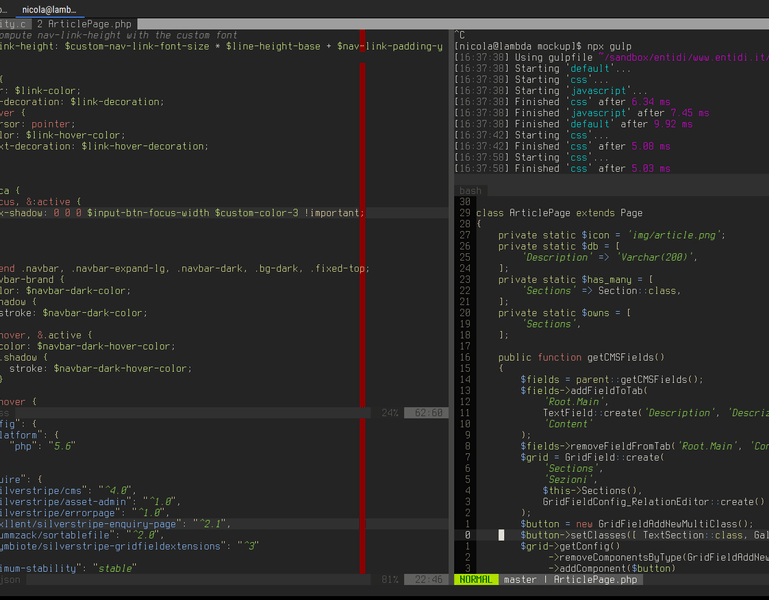
The software developed here is always released under an open source license: we do not mind if you modify or copy the sources, provided you do not require support once you modified it. For the same reasons, the software stacks we use (and, above all, the operating systems) is always open source too.
The rational behind this approach is quite logic: we hate vendor lock ins and we think this way of working is parasitic and has no future.
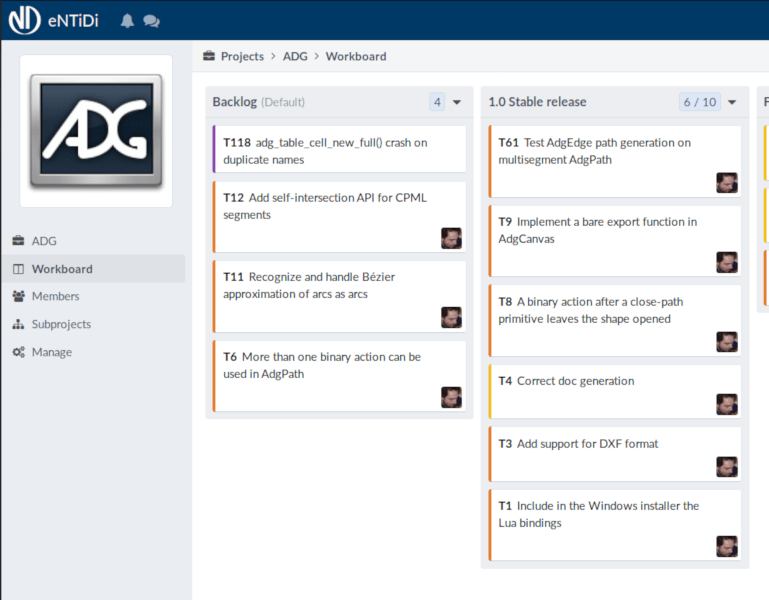
Another important aspect we value is transparency.
For every new non-trivial project, being it a web application, a binary program or a whole system, a new private project is created in our bug tracker. Here the source code can be browsed and discussed, even before it will be released (the source code is always stored under source control management system). This also gives you an idea of the "size" of the work involved for a specific feature request.
On the tracker, clients can file bugs or request new features: everything will be kept in order, archived for posterity. Traditional communication channels are still accepted though.